
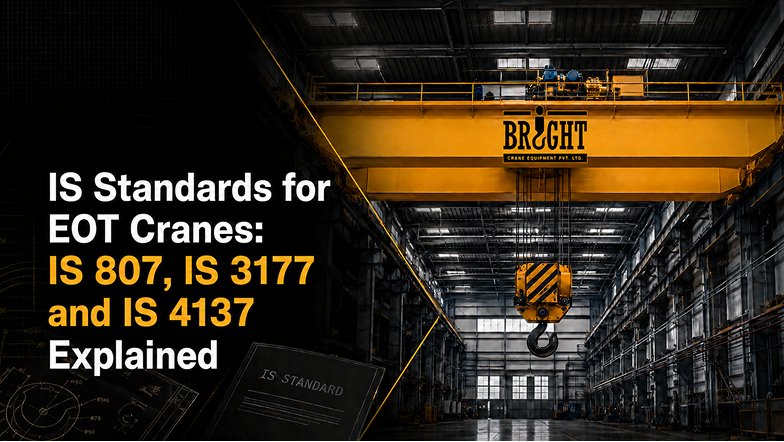
Indian Standards, published by the Bureau of Indian Standards (BIS), define how a crane should be designed, manufactured, erected, inspected and tested. For EOT crane and gantry cranes, three standards come up most often — IS 807, IS 3177 and IS 4137. But there is an important catch that most supplier pages get wrong: these standards have been revised over the years, and one of them has been superseded.
IS 807 covers the structural design, manufacture, erection and testing of the crane structure. IS 3177:2020 is the current code for the design, manufacture, inspection and testing of electric overhead travelling and gantry cranes for all applications. IS 4137 was historically used for heavy-duty steel-work cranes and, according to the current BIS reference, has been superseded by IS 3177:2020.
This guide explains what each standard covers, which one applies to your crane, how the revisions changed things, and exactly which compliance documents you should ask your manufacturer for. Verifying the current revision is not a technicality — it is how you make sure you are getting what you paid for.
What Are Indian Standards for EOT Cranes?
Indian Standards standardize the design, manufacturing, erection, inspection and testing requirements for industrial equipment. For cranes, they ensure that machines from different manufacturers meet a common baseline for structural strength, mechanical performance, electrical safety and load-handling reliability.
Which standard applies to your crane depends on the crane type, the industry, the duty cycle, the capacity and the project specification. A light-duty factory crane and a heavy-duty steel-plant crane are not governed by the exact same requirements. That is why the applicable standard should always be stated clearly in the crane quotation and technical documentation.
IS 807 for EOT Cranes
What Does IS 807 Cover?
IS 807 is the code of practice for the design, manufacture, erection and testing of the structural portion of cranes and hoists. In simple terms, it governs the crane's steel structure — the load-bearing skeleton that carries the load.
It is important to position IS 807 correctly. It is not a complete, all-in-one EOT crane standard. It is a structural design and structural portion standard that works alongside the crane-specific requirements of IS 3177.
Structural Components Covered Under IS 807
- Main girder
- End carriage
- Gantry structure
- Runway support
- Platforms and walkways
- Brackets and bracing
- Access ladders
- Structural welds and connections
Why IS 807 Compliance Matters
The structure is what keeps the crane and its load safely in the air. IS 807 compliance ensures:
- Structural strength to carry the rated load
- Deflection control so the girder does not sag excessively under load
- Reliable load-bearing performance over the crane's life
- Safe erection at site
- Long-term structural reliability
IS 3177 for EOT Cranes
What Is IS 3177?
IS 3177 is the code of practice for electric overhead travelling cranes and gantry cranes. According to the current BIS reference, IS 3177:2020 covers the design, manufacture, inspection and testing requirements for these cranes across all applications. If IS 807 governs the structure, IS 3177 governs the crane as a complete working machine.
Key Areas Covered Under IS 3177
- Crane design
- Manufacturing requirements
- Mechanical equipment
- Electrical equipment
- Hoisting mechanism
- Cross travel and long travel mechanisms
- Crane erection
- Inspection
- Testing
- Safety and operational requirements
IS 3177:1999 vs IS 3177:2020 vs IS 4137:2015
The revision history matters, because older tenders and documents may reference earlier versions. Here is how to understand each:
| Standard | How to understand it |
|---|---|
| IS 3177:1999 | Earlier code for electric overhead travelling and gantry cranes other than steel-work cranes. |
| IS 3177:2020 | Revised, all-application standard referenced by the current BIS material — treat this as the current version. |
| IS 4137:2015 | Earlier heavy-duty steel-work crane standard; superseded by IS 3177:2020 according to the current BIS reference. |
Some older reference guides list IS 3177:1999, IS 4137:2015 and IS 807:2006 with separate scopes. That is why it is essential to confirm the current revision status before citing any standard in a specification or quotation.
IS 4137 for Heavy-Duty EOT Cranes
What Was IS 4137 Used For?
IS 4137 was historically the reference for heavy-duty electric overhead travelling cranes and special service machines. Its typical applications included:
- Heavy-duty electric overhead travelling cranes
- Steel plants and steel works
- Special service machines
- High-duty-cycle applications
- High-temperature or demanding industrial environments
IS 4137 and Steel Plant Cranes
Steel-plant cranes operate under some of the harshest conditions in industry — high-frequency operation, heavy loads, heat, dust and special handling requirements. For such cranes, always confirm the project-specific technical specification and the latest applicable BIS standard rather than relying on a legacy reference alone.
Is IS 4137 Still the Latest Standard?
Direct answer: IS 4137:2015 should not be quoted as the latest standalone standard. According to the current BIS reference, IS 3177:2020 has superseded IS 4137:2015. You may still see IS 4137 referenced in existing tenders, legacy documents or older project specifications — in those cases, verify the current supersession status before proceeding.
IS 807 vs IS 3177 vs IS 4137
| Standard | Main Focus | Typical Relevance |
|---|---|---|
| IS 807 | Structural design, manufacture, erection and testing of cranes and hoists | Crane structure and load-bearing components |
| IS 3177:2020 | Electric overhead travelling and gantry cranes for all applications | General industrial EOT and gantry crane requirements |
| IS 4137 | Heavy-duty EOT cranes and special service machines for steel works | Historical / legacy steel-plant and heavy-duty reference |
Use IS 807 for the structural scope, IS 3177 for the overall EOT and gantry crane requirements, and treat IS 4137 as a heavy-duty steel-work context reference. For exact project compliance, the latest BIS document, the tender specification and a qualified engineer's review are essential.
Which IS Standard Applies to Your EOT Crane?
Different crane configurations fall under different standards, so it helps to first know the types of EOT crane that suit your application. Use this decision table as a starting point to identify which standards to review for yours:
| Application | Standards to Review |
|---|---|
| Factory EOT crane | IS 3177:2020 + relevant structural requirements |
| Warehouse overhead crane | IS 3177:2020 + IS 807 structural aspects |
| Single girder EOT crane | IS 3177:2020 + structural design requirements |
| Double girder EOT crane | IS 3177:2020 + IS 807 structural requirements |
| Steel plant crane | IS 3177:2020 and project-specific heavy-duty requirements |
| Tender mentioning IS 4137 | Verify tender conditions and latest BIS supersession status |
| Customized special-service crane | Applicable BIS standards + project technical specification |
Keep in mind that the applicable standard also influences the build — a crane engineered to a higher duty class or heavy-duty requirement uses stronger components, which is one of the reasons the EOT crane price varies from one specification to another. So when you shortlist standards for your application, review the cost implications alongside them rather than treating them as separate decisions.
EOT Crane Design and Manufacturing Compliance Checklist
When evaluating a crane against Indian Standards, confirm that the design and manufacturing address each of these:
- Rated lifting capacity
- Crane span
- Lift height
- Duty classification
- Operating frequency
- Main girder design
- End carriage design
- Hoist and trolley
- Wheel load
- Motor and brake system
- Limit switches
- Overload protection
- Emergency stop
- Control panel
- Runway arrangement
- Welding and fabrication quality
- Erection procedure
- Load testing
- Inspection documentation
EOT Crane Testing Requirements
Before an EOT crane is commissioned, it should pass a series of inspections and tests. A typical testing sequence includes:
- Visual inspection
- Dimensional inspection
- No-load test
- Load test
- Hoist operation test
- Long travel test
- Cross travel test
- Brake test
- Limit switch test
- Emergency stop test
- Overload protection test
- Deflection or structural performance verification
- Final inspection and test report
Exact load-test percentages and technical acceptance limits should only be quoted from the verified text of the latest official standard. Always confirm these figures against the current BIS document rather than relying on a general reference.
Documents to Request From an EOT Crane Manufacturer
Compliance is only meaningful if it is documented. Ask your manufacturer for the following before accepting delivery:
- Technical data sheet
- General arrangement drawing
- Load calculation
- Structural design calculation
- Motor and hoist details
- Electrical schematic
- Material test certificates
- Welding quality records
- Inspection report
- Load-test certificate
- Installation and commissioning report
- Operation and maintenance manual
- Warranty certificate
- Declaration of applicable standards (with revision year)
IS Compliance vs BIS Certification
These two terms are often confused, but they are not the same thing — and the difference matters:
IS standard compliance means the crane's design, manufacturing and testing have been carried out in line with the requirements of the relevant Indian Standard.
BIS certification or licence can be a separate regulatory and certification matter, with its own documentation and process.
A crane should not be marketed as "BIS certified" without valid supporting documentation. When in doubt, ask the supplier to state, in writing, the applicable standard, its revision year, and the supporting documents that back the claim.
Final Word
Understanding IS 807, IS 3177 and IS 4137 puts you in control of your crane purchase. IS 807 governs the structure, IS 3177:2020 is the current code for EOT and gantry cranes across applications, and IS 4137 is best understood as a legacy heavy-duty steel-work reference that has been superseded by IS 3177:2020.
Before you finalize any EOT crane, ask your manufacturer to state the applicable standards and revision years in writing, and to provide the supporting compliance and test documents. A supplier who is transparent about standards is a supplier you can trust with your safety and your investment.
Frequently Asked Questions (FAQ)
Are IS standards mandatory for EOT cranes in India?
IS standards are widely treated as the baseline for safe crane design and are commonly specified in industrial tenders, factory safety requirements and client contracts. Whether they are contractually or legally required depends on the specific project, industry and buyer conditions, so always confirm the applicable requirements for your site and tender.
Do international standards like FEM or ISO apply alongside IS standards?
Yes, they can. Many industrial and export-oriented projects specify FEM or ISO requirements in addition to Indian Standards, especially for duty classification and mechanism design. When both are specified, the crane must be engineered to satisfy each applicable standard, so confirm exactly which standards your project requires.
How often are IS crane standards revised?
IS standards are periodically reviewed and revised by BIS, which is exactly why the revision year matters — for example, IS 3177:2020 replaced earlier versions. Rather than assuming an older edition is current, always verify the latest published revision against the official BIS document before citing it.
Can an imported EOT crane comply with Indian Standards?
An imported crane can be supplied to meet Indian Standards if it is specifically designed, documented and tested to those requirements. Compliance is not automatic simply because a crane is imported or built to a foreign standard — ask for documentation that confirms conformity with the applicable IS standard and revision year.
Who is responsible for ensuring EOT crane standard compliance?
Responsibility is shared. The manufacturer is responsible for designing, building and testing the crane to the applicable standards and providing supporting documents, while the buyer is responsible for specifying the correct standards in the enquiry and verifying the compliance documents before accepting delivery.