
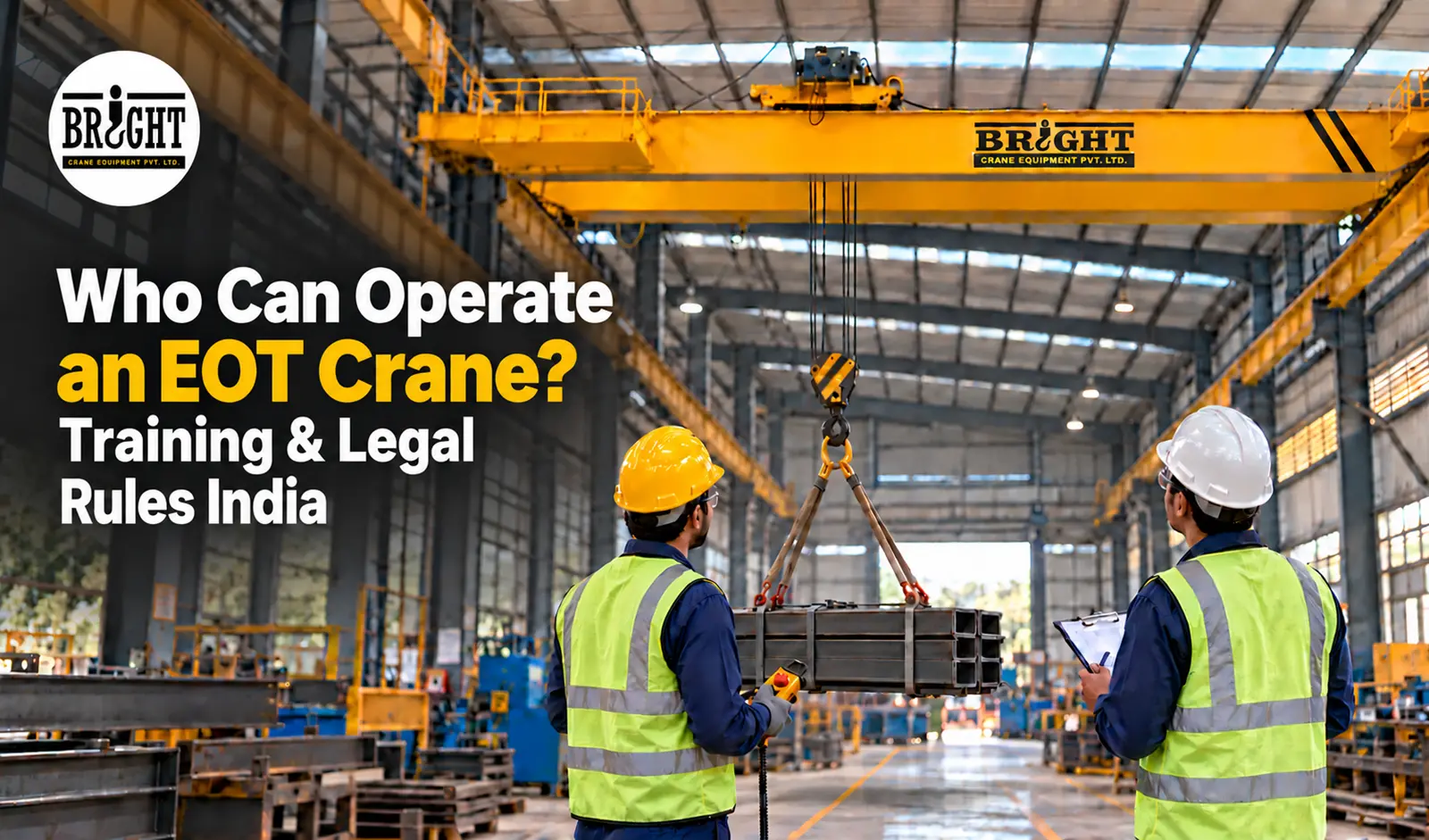
In India, an EOT crane should be run only by a person who is over 18, medically fit, trained on that type of crane and authorised in writing by the employer. There is no government licence for EOT crane operators. The factory is responsible for training, authorisation and keeping the records.
Read →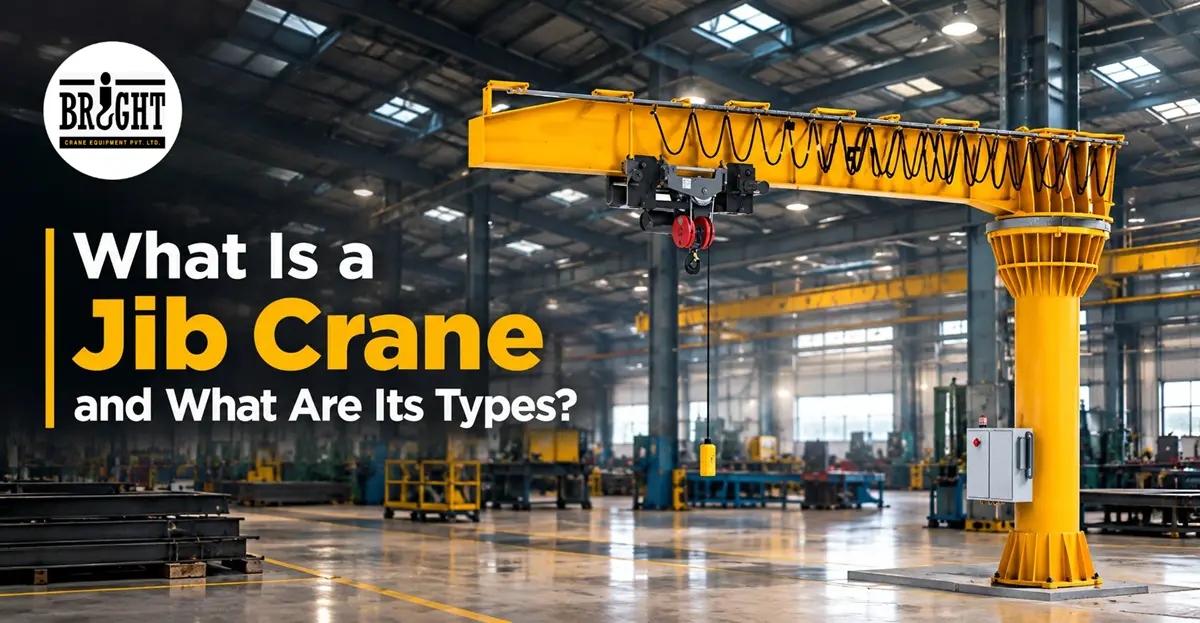
A jib crane is a lifting machine with a horizontal or articulated arm, called a jib, that supports a hoist for lifting, lowering, and moving loads within a defined working area. Jib cranes are commonly used in manufacturing plants, workshops, warehouses, fabrication facilities, and assembly areas for localized material handling.
Read →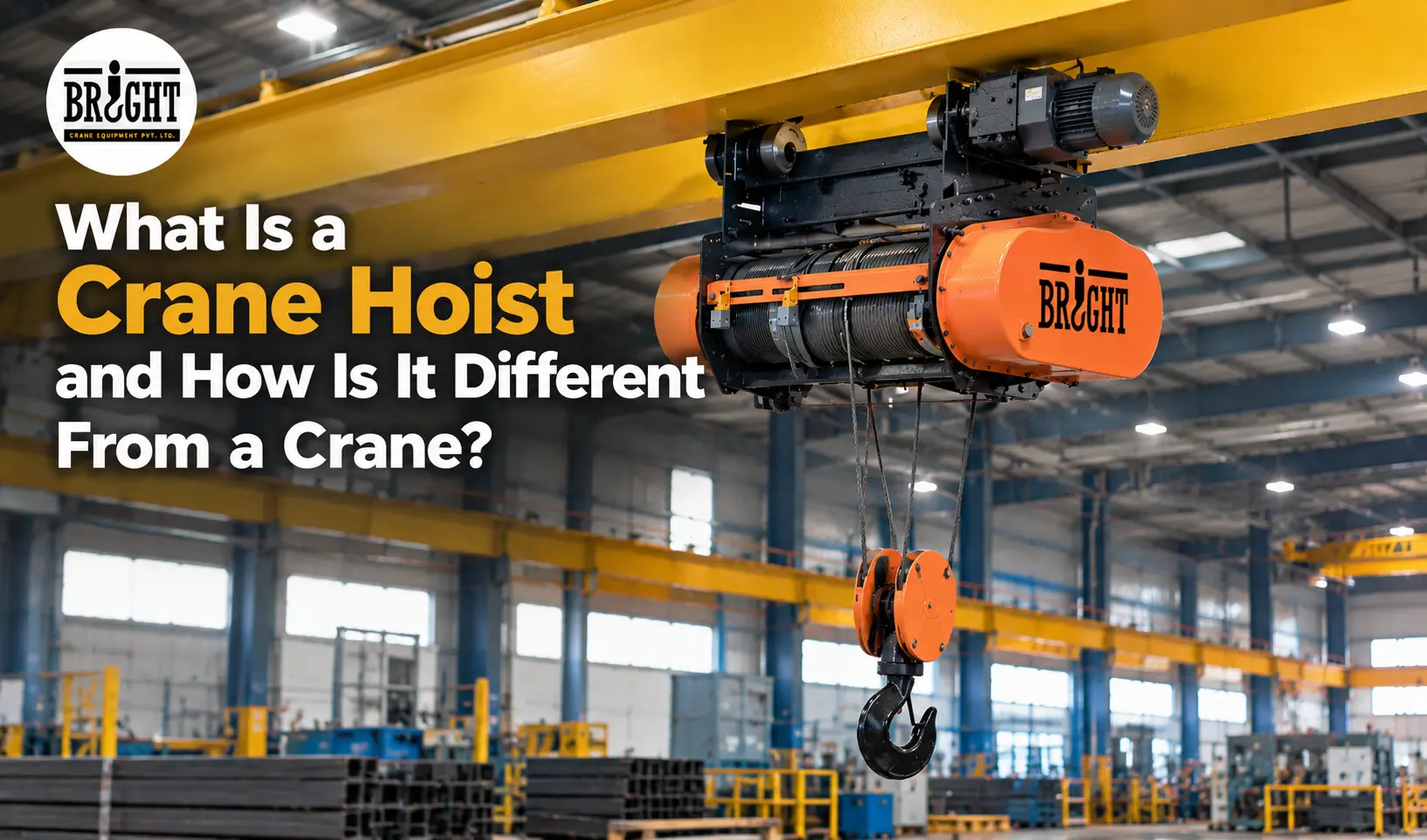
A crane hoist is the lifting mechanism of a crane. It raises, lowers and holds a load using a motor, gearbox, rope drum or chain wheel, wire rope or load chain, hook and a fail-safe brake. The hoist handles only the vertical lift; the crane structure (trolley, bridge girder and runway) moves the hoist horizontally. Wire rope hoists suit heavier loads and higher lifts, while electric chain hoists suit lighter, compact applications.
Read →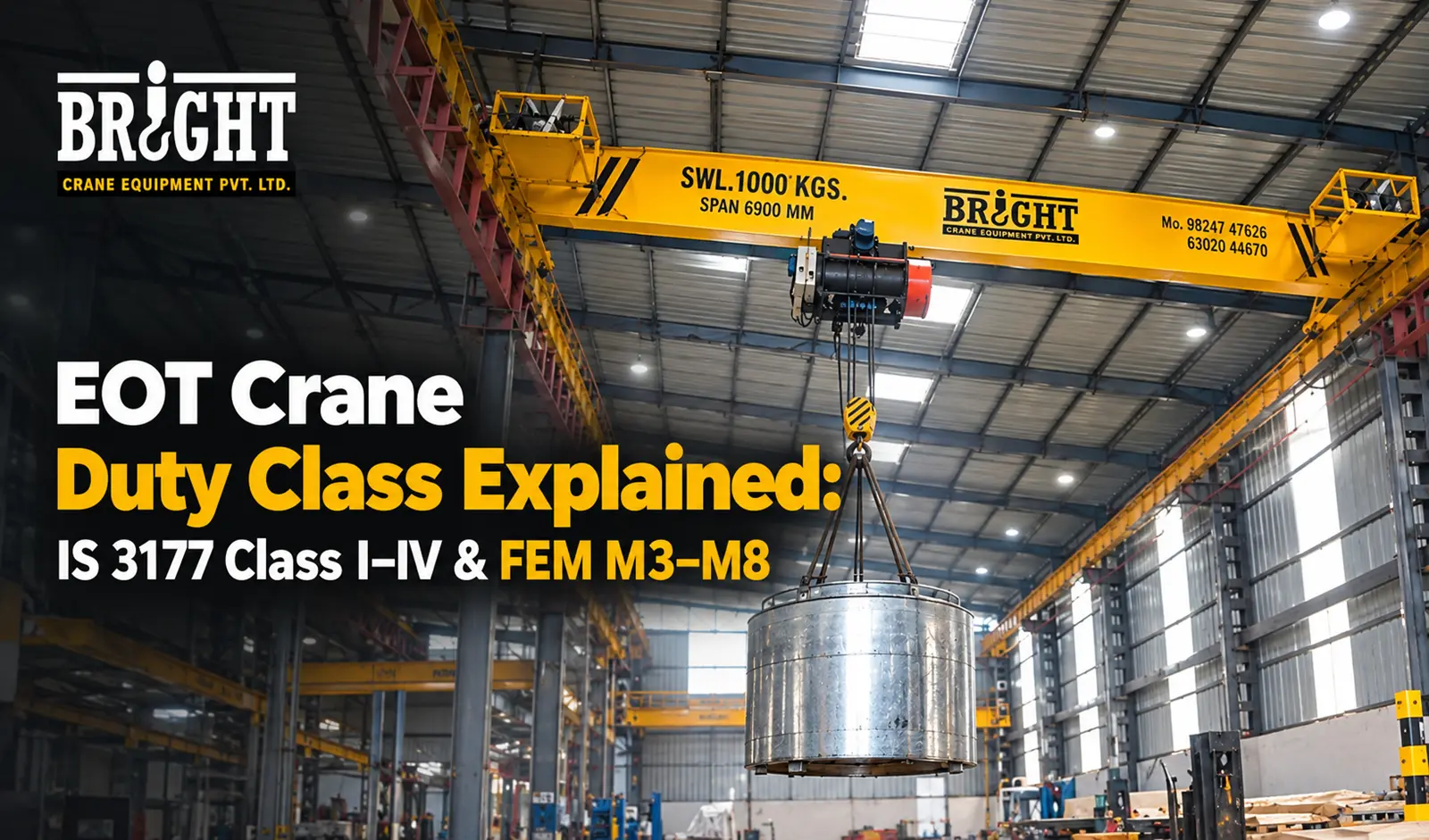
Duty class is the single most consequential specification on an EOT crane enquiry - and the one most often copied from a previous purchase order without being checked.
Read →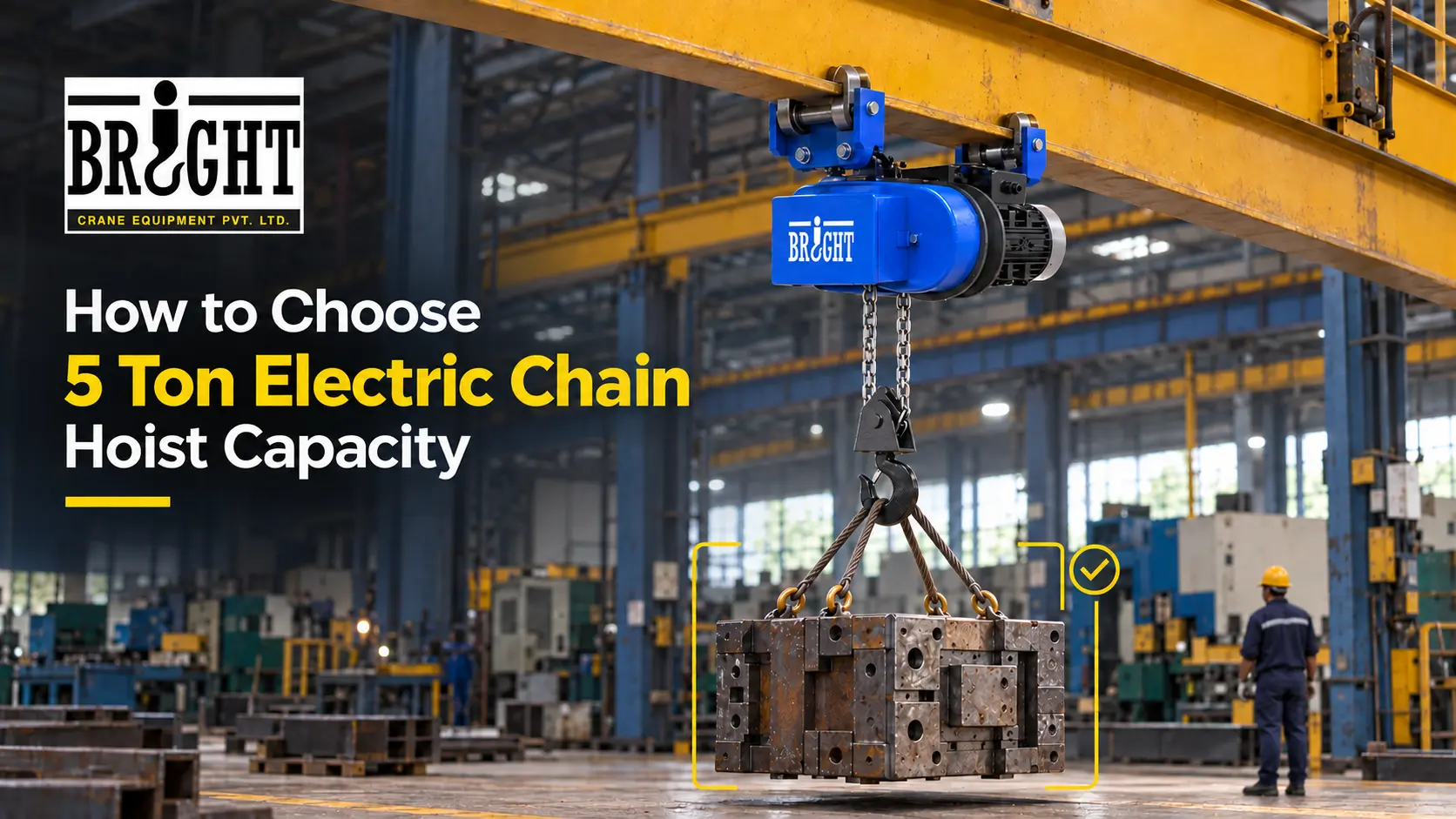
Most buyers decide their hoist in under a minute. The heaviest load in the shop is around four and a half tonnes, so a 5 ton hoist must be the answer. Six months later the motor is tripping, the brake is slipping and the load chain has started to elongate.
Read →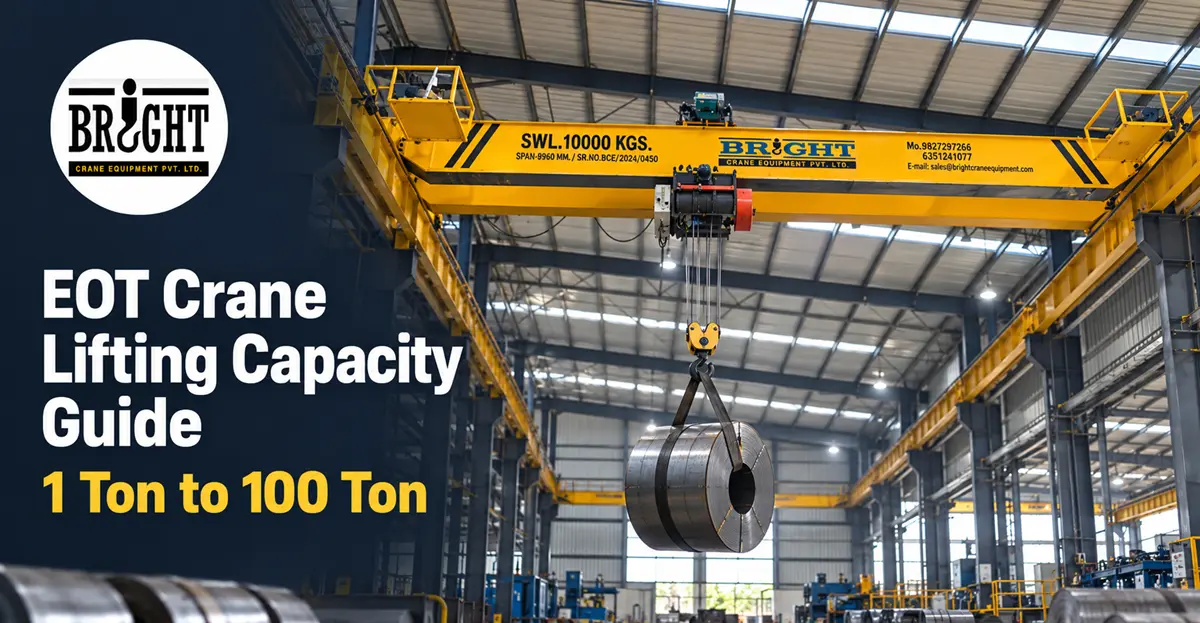
EOT crane lifting capacity is the maximum load a crane can safely lift at the hook, rated in tonnes and available across the full span. To select it, add your heaviest single load to the weight of all below-the-hook attachments, apply a 10–25% safety margin, and round up to the next standard rating - 1, 2, 3, 5, 7.5, 10, 12.5, 15, 20, 25, 30, 40, 50, 63, 80 or 100 tonnes. Single girder cranes suit roughly 1-12.5 tonnes; double girder is standard from 20 tonnes up to 100 tonnes and beyond.
Read →